5 Design Keywords from Design Miami Seoul 2026
Here are five keywords from Design Miami Seoul 2026 that invite us to look at familiar design in a new way.
Design Miami Seoul 2026 brought together a wide range of design, from furniture and lighting to craft and technology-driven works. For this article, we selected noteworthy pieces through five keywords: tradition, reuse, technology, story and boundaries. Rather than grouping different works into a single movement, we explore these keywords as ways of looking at each design.
TRADITION ‘Not simply carrying tradition forward’
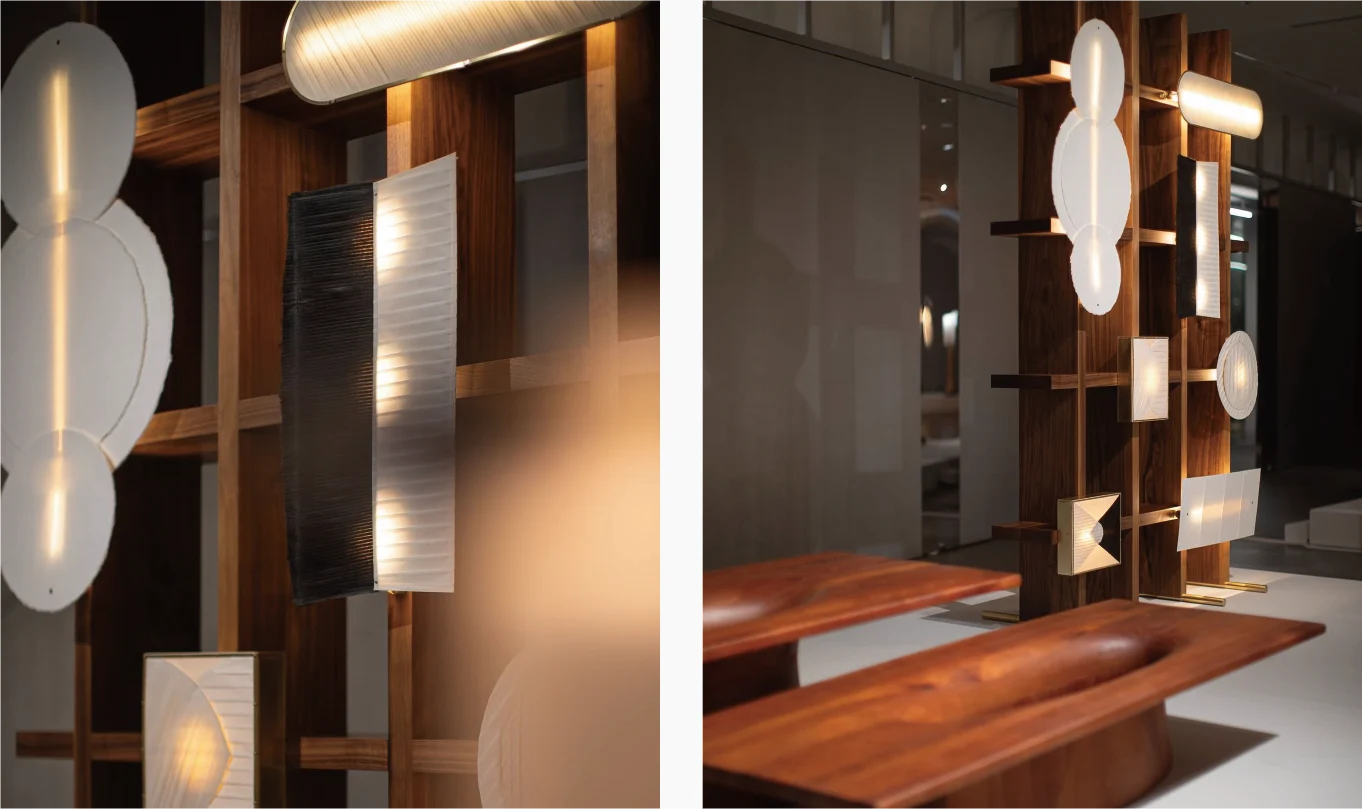
Kwon Jung-mo . Lighting inspired by hanok windows
Interpreting tradition for the present does not mean simply reproducing traditional forms. Kwon Jung-mo used hanji, walnut, brass and LEDs in lighting inspired by the windows of hanok. Retaining the structure and image of hanok window frames while changing their materials and function, the designer reimagined them as objects for contemporary spaces. The question worth considering is which elements of tradition to preserve. Rather than restoring a familiar form exactly, the work carries forward essential qualities such as structure and proportion, translating tradition into the language of design today.
REUSE ‘Giving old materials a next role’
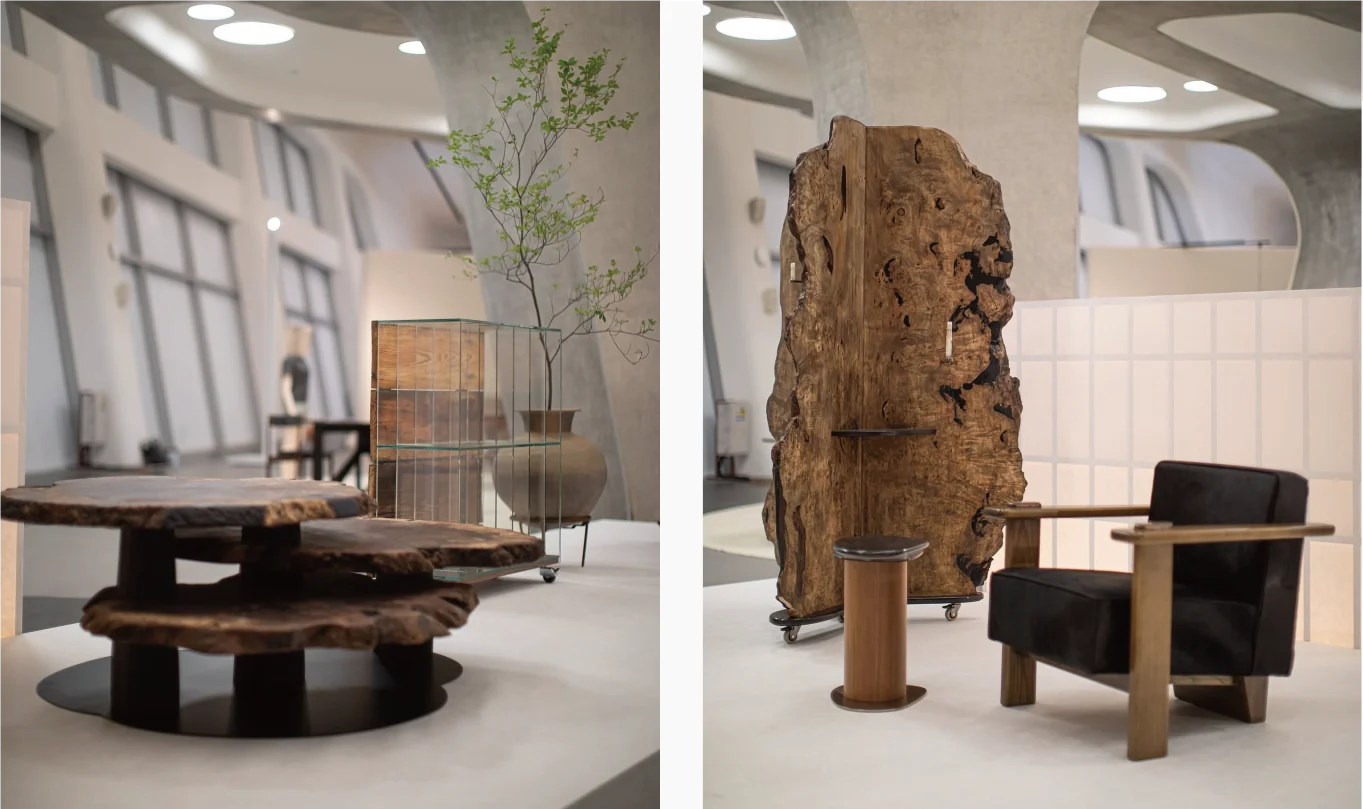
TeoyangStudio . Remaining Things
Some works look again at what already exists instead of creating new materials. Remaining Things by TeoyangStudio made new objects using reclaimed materials salvaged from traditional hanok being dismantled, along with traditional production methods. A defining feature is that it carries with the materials the memories of their place and time. Reuse is more than a way to reduce waste. It is also a design approach that gives existing materials new uses and meanings. In this work, rather than erasing the traces of old materials, time itself becomes part of the piece.
TECH ‘When technology does not replace tradition’
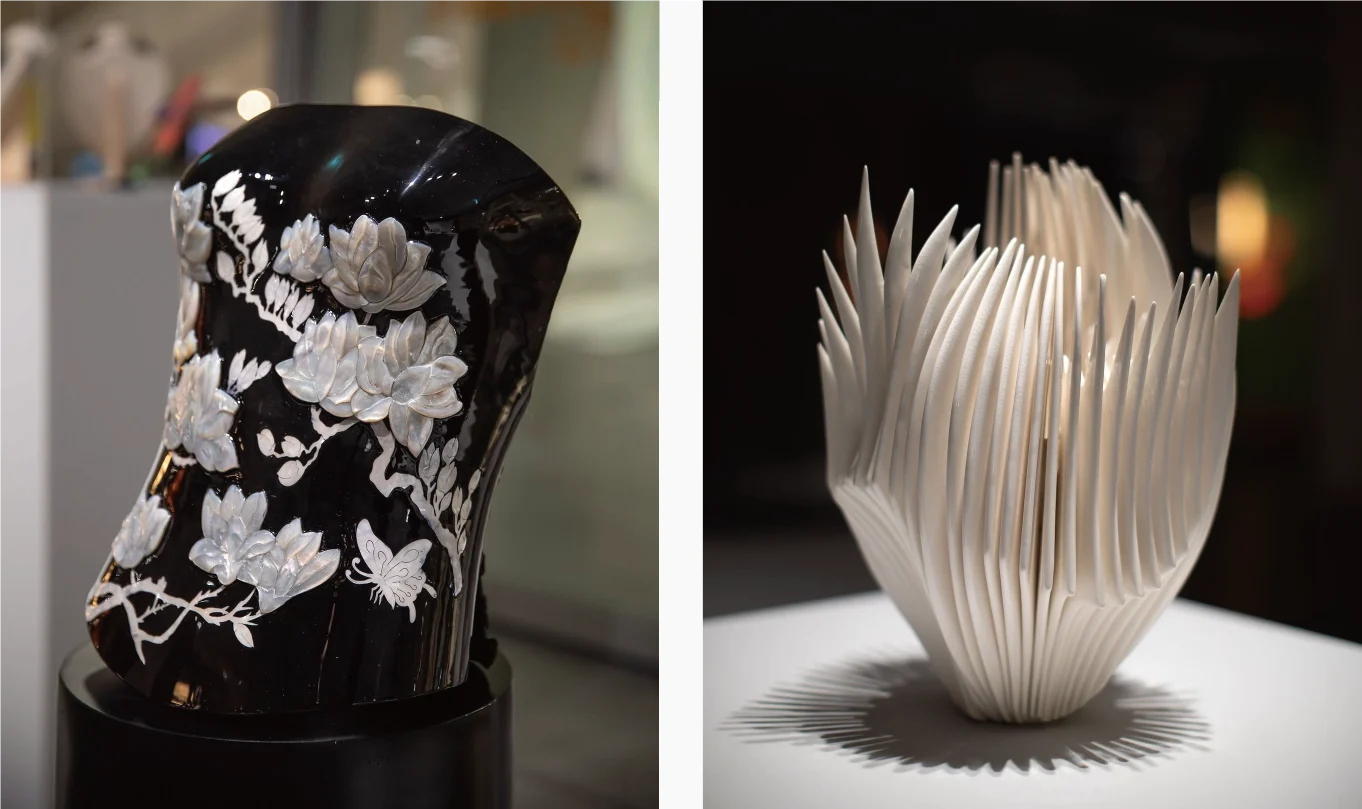
LEJE . The meeting of 3D printing and mother-of-pearl inlay
Using technology does not necessarily produce a futuristic look. LEJE presented work combining 3D printing, mother-of-pearl inlay and natural lacquer. The forms are made with digital fabrication techniques and finished by hand using traditional methods. Here, technology and craft are not in competition. By dividing the work between what machines do well and what people do well, they complete a single piece. Rather than pushing tradition aside, technology has created a new way for traditional production methods to continue.
STORY ‘When time gathers in furniture’
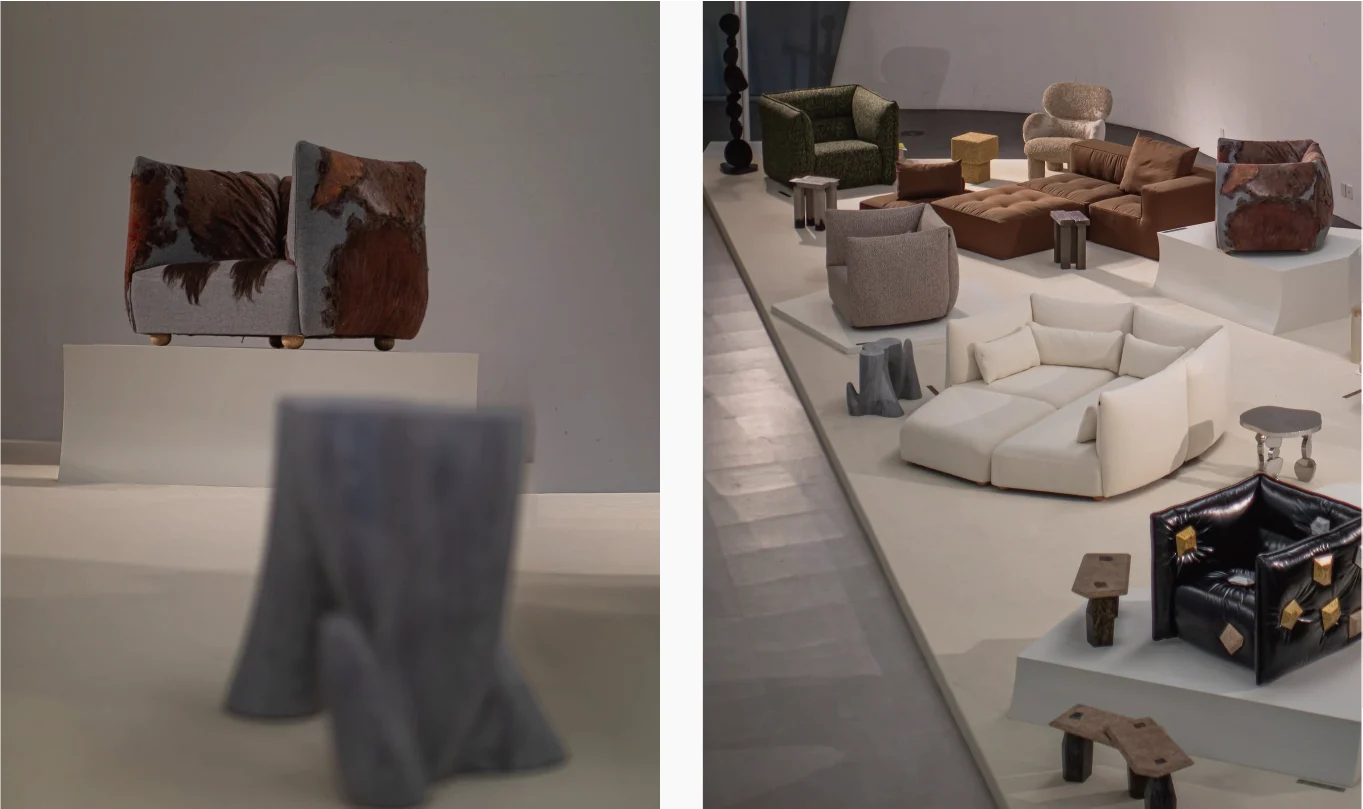
Alloso . Layers of Resonance
Furniture is usually described in terms of function. Most pieces are made for sitting or leaning against. Layers of Resonance by Alloso takes a slightly different view of furniture. The project shows how new memories and relationships emerge as time, people and materials accumulate around a piece. The story of the furniture is not an explanation added separately; it takes shape naturally through materials and use, people and time. It expands the idea of furniture by viewing it not simply as an object, but as a medium in which time resides.
BOUNDARY ‘Beyond the line between product and artwork’
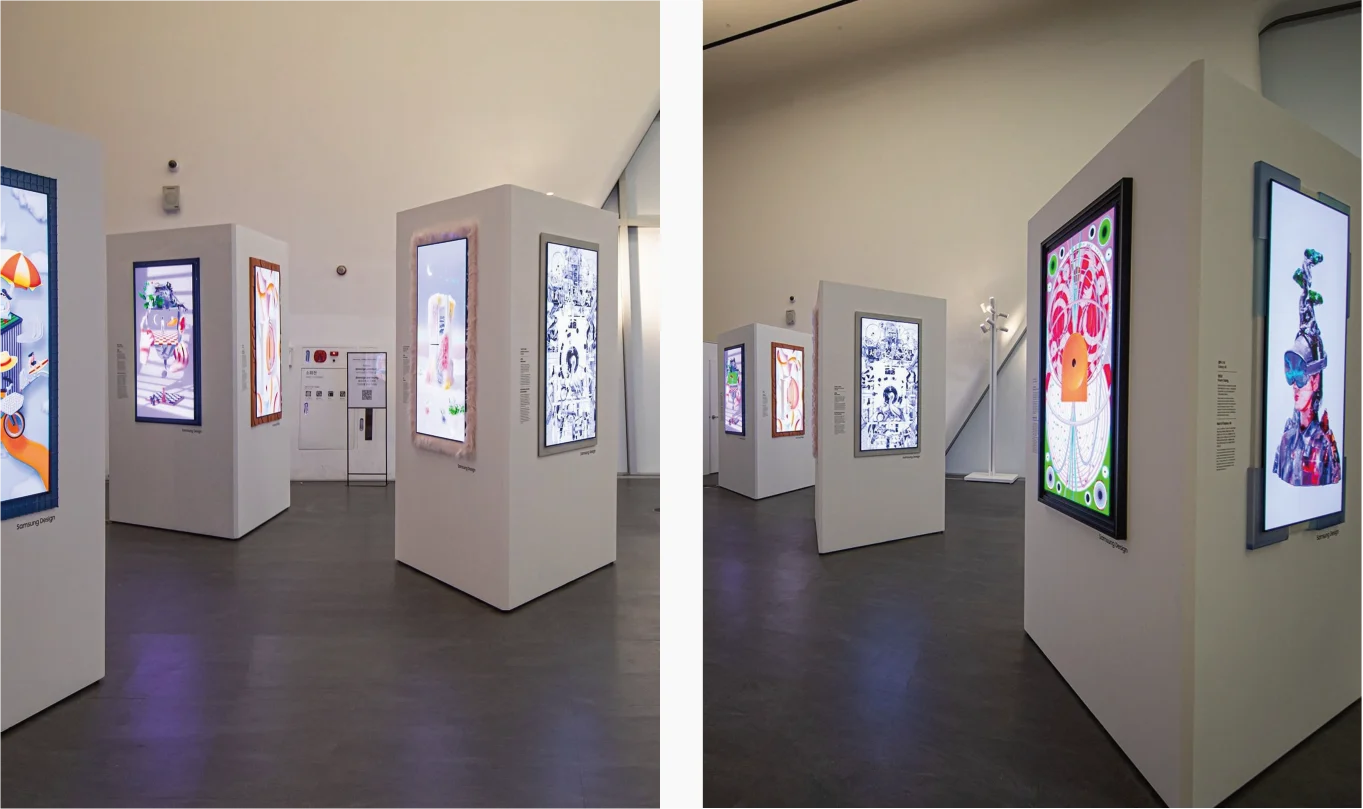
Samsung Electronics . Design Is an Act of Love
Samsung Electronics’ exhibition explores the boundary between products and art. Fourteen teams of Korean artists reinterpreted Samsung Electronics products from their own perspectives, presenting their work through the OLED TV SH95 and 14 custom frames. AI was also used in some works as a tool to expand creative possibilities. The custom frames, in particular, are more than decorative borders around the artworks. By becoming part of a unified whole with the works on screen, they change the role of the TV itself. The product becomes a tool for showing art and, at the same time, part of the artwork. As the boundary between product and artwork blurs, the way we see a product also changes.
The five works selected from Design Miami Seoul 2026 were made in different ways. The five keywords are not a formal classification for explaining design; they were chosen to offer different perspectives on the works. What stood out in the exhibition was less the newness of the forms themselves than the way familiar things were given different value. Existing things—from traditional materials and techniques to old materials and products—took on entirely new forms through unexpected combinations. Making design new does not only mean searching for something new from scratch; it can also begin by asking how we might see what is already here in a different light.