Culture
How to View Art Basel
Art Basel is not a fair that can be fully experienced by quickly moving from one work to another. Most collectors and industry professionals who visit the fair do not try to see every section in a single day. Instead, they move at their own pace and spend time in the spaces that feel most meaningful to them. At Art Basel, what people remember is often not how many works they saw, but where they stayed the longest and what kind of atmosphere they experienced.
1.
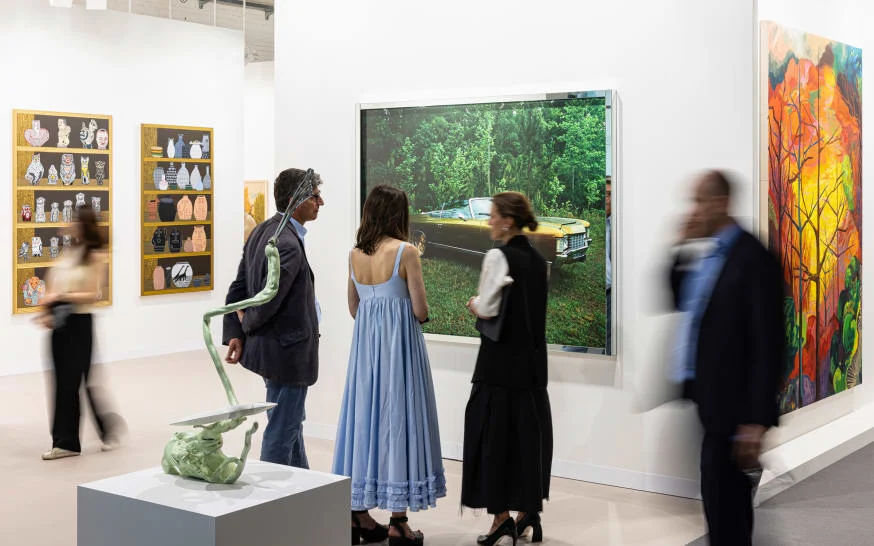
For first-time visitors, it is best to begin with Galleries, the main section of the fair. This is where many of the world’s leading blue-chip galleries present their programs, making it one of the clearest places to understand the current direction of the global contemporary art market. From early in the morning, collectors and brand representatives naturally begin gathering around booths from galleries such as Gagosian, Hauser & Wirth, and David Zwirner.
However, the atmosphere of Art Basel is not simply about seeing famous works. It is often more important to observe where long conversations are taking place and which works people spend time standing in front of. Many collectors are not only looking at the artwork itself, but also at the direction of the gallery and the context surrounding the artist.
2.
Further inside the fair, the atmosphere changes again around the Unlimited section. Large-scale installations and performance works fill the space, creating an environment that feels closer to entering a spatial experience than simply viewing art. This is one of the reasons many architects, spatial designers, and creative directors spend a long time here.
3.
For those interested in discovering new movements and emerging artists, Statements is also worth visiting slowly. Younger galleries and new artists present more experimental works here, offering a closer look at where contemporary art may be heading next. Compared to the main market halls, the atmosphere feels quieter and more personal.
4.
Feature moves at an even slower pace. Many presentations are curated around a specific artist, period, or theme, encouraging visitors to look at works within a broader historical and cultural context. Rather than quickly consuming images, this section naturally invites slower viewing and deeper observation.
5.
To experience Art Basel more fully, it is also important to step outside the exhibition halls and spend time in the city itself. Parcours is a public art program that uses Basel as part of the exhibition, placing works throughout historic buildings, streets, and public spaces. As the atmosphere of the fair blends into the rhythm of the city, Art Basel begins to feel less like a single event and more like a cultural season moving across Basel itself.
6.
It is also better not to schedule each day too tightly. Taking breaks at lounges, cafés, and hotel bars is part of the rhythm of the fair. Many industry professionals actually spend more time in hotel lounges and riverside restaurants than inside the exhibition halls themselves. By late afternoon, private tours and collector meetings continue across the city, and the atmosphere begins to shift once again.
For this reason, Art Basel is not simply an event about viewing art. It is closer to a city-wide platform where people from across the global cultural industry gather, move, build relationships, and experience new ideas together.